

Witches and Other Cross-Border Tales
Step into the legend
Before you start:
Type of route
car or e-bike
320 kilometres
of adventure
6 days / stages
of happiness
Season
March to November
General overview
This six-day road trip between France and Spain takes you through the beautiful regions of Navarre and the Pyrénées-Atlantiques. You set off from Pamplona after visiting its historic centre and famous cathedral, heading north through forests and valleys with the chance to visit several museums devoted to the art and craftsmanship of the region. You travel as far as Bayonne before doubling back towards Spain, where medieval villages and ancient sanctuaries punctuate the journey.
Stage descriptions:
Freedom first: this itinerary can be tailored to your needs, with the possibility of selecting specific stages.
Day by day
Day one
Your adventure begins in Pamplona. With a guide in tow, you explore the city’s historic centre and its cathedral, whose cloister and museum offer a first taste of Navarrese heritage. The discovery continues at the table, with a selection of pintxos and Navarrese wines, before soaking up the capital’s cultural buzz.
Day two
This second day takes you from Pamplona to Cambo-les-Bains, crossing the Baztán valley. First stop: Arizkun, where the Santxotena park-museum weaves contemporary sculpture and nature together while paying tribute to the Agotes — a mysterious community of these valleys for centuries. You press on to Zugarramurdi, a village bound up with the history of witches and akelarres: a visit to the museum and caves sheds light on a dark chapter where superstition and the Inquisition collided. On the way to France, a stop in Espelette is a must — famous, of course, for its iconic Basque pepper.
Day three
From Cambo-les-Bains to Bayonne, this day celebrates the artisan heritage of the French Basque Country. You begin with a visit to the Puyodebat chocolate museum, which traces the story of cocoa and its deep roots in Basque tradition. Then on to La Bastide-Clairence, one of the prettiest villages in the French Basque Country, where glassblowing and macaron workshops bring the backstreets to life. Come afternoon, you reach Bayonne, which you can explore by bike or on a leisurely wander through its historic streets.
Day four
A day between the ocean and the border, from Bayonne to Bera. You start with the urban art that has been brightening the walls of Bayonne since the Point de Vue festival, before taking the road to Biarritz. A walk along the coast, from the lighthouse to the Rocher de la Vierge, rewards you with a sweeping Atlantic panorama. Come afternoon, you cross the border to reach Bera, a Navarrese town whose centuries-old facades are steeped in stories — from 16th-century palaces to Indiano mansions.
Day five
This fifth day reveals the hidden valleys of Bidasoa and Malerreka. In Sumbilla, you dive into the area’s smuggling past through a hands-on, playful experience. The road continues to Santesteban, then through villages steeped in age-old traditions such as Ituren and Zubieta. In Leitza the Stone Park-Museum introduces you to traditional Basque rural sports. The stage winds up in Lekunberri, a characterful village where Hemingway himself once pitched up.
Day six
For this final stage, you climb towards the sanctuary of San Miguel de Aralar — a sacred site for millennia, as the many megaliths dotting the hillside attest. Along a winding road through beech forests, you descend into the Sakana valley to visit the recently restored Romanesque monastery of Zamartze. One last stop in Arruazu brings you to the Forja Brun, a family forge in operation since 1772. The return to Pamplona closes a loop rich in legends and living traditions.
Points of interest
1
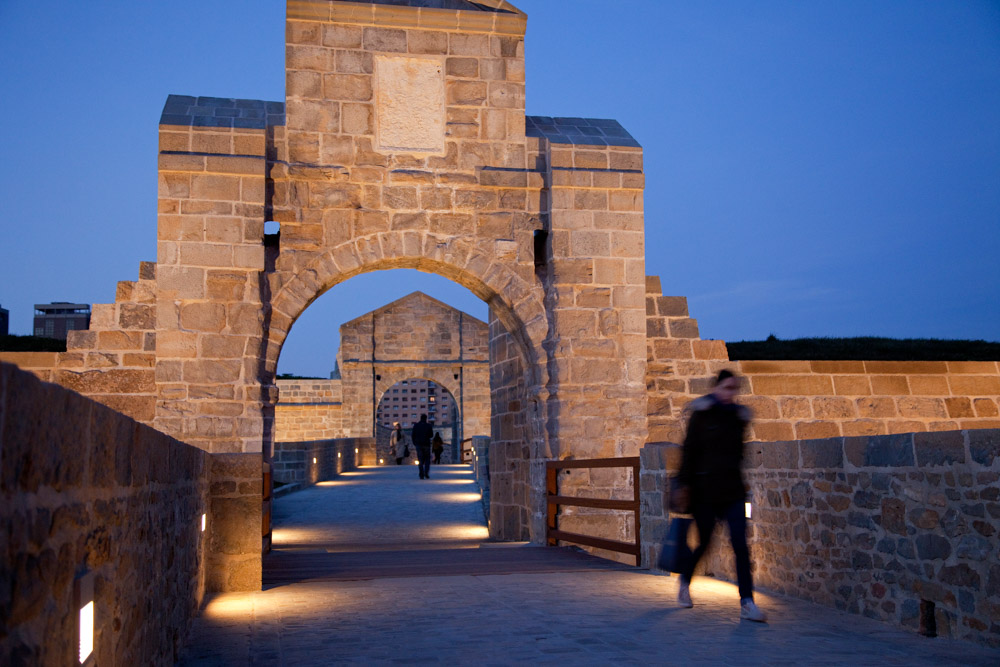
Pamplona cathedral and its historic centre
Information
The streets of Pamplona breathe the atmosphere of its former kingdom. Its medieval heritage, its ramparts and the San Fermín festivities make it an unmissable destination. The façade of its cathedral barely hints at the 14th-century Gothic wonder hidden behind its doors.
Photo : © Patxi Uriz
2
Train de la Rhune
Information
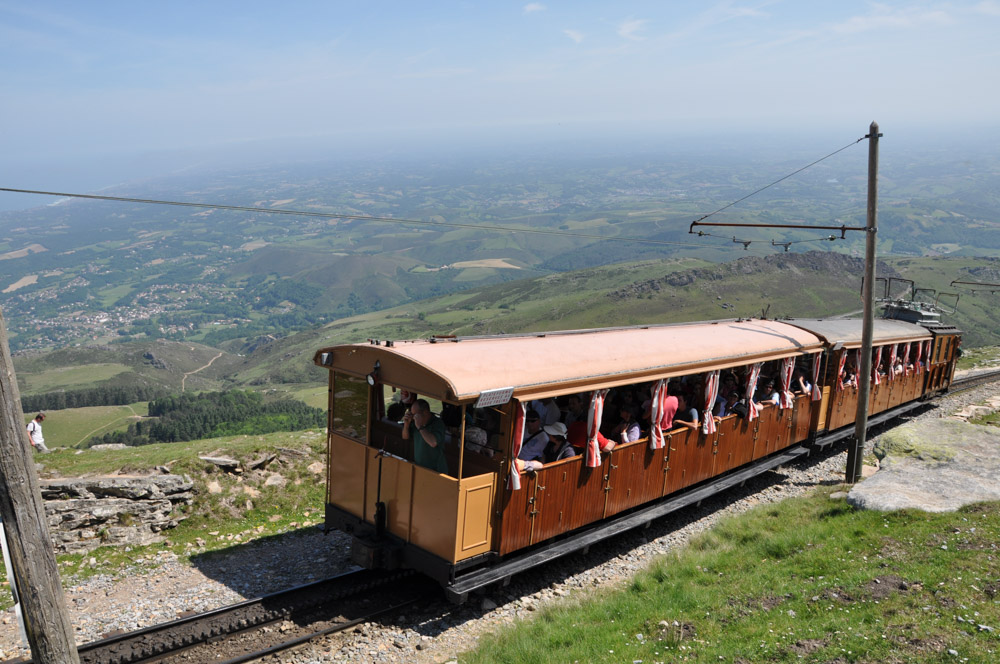
This is a century-old rack railway (1924) situated in the French-Basque Pyrenees. It climbs to 905 m altitude from Sare in wooden carriages, offering panoramic views over the sea and the Baztan. Its meadows are home to pottoks (the local horse) and vultures, in the heart of a pristine landscape.
Photo : © TC Basques
3
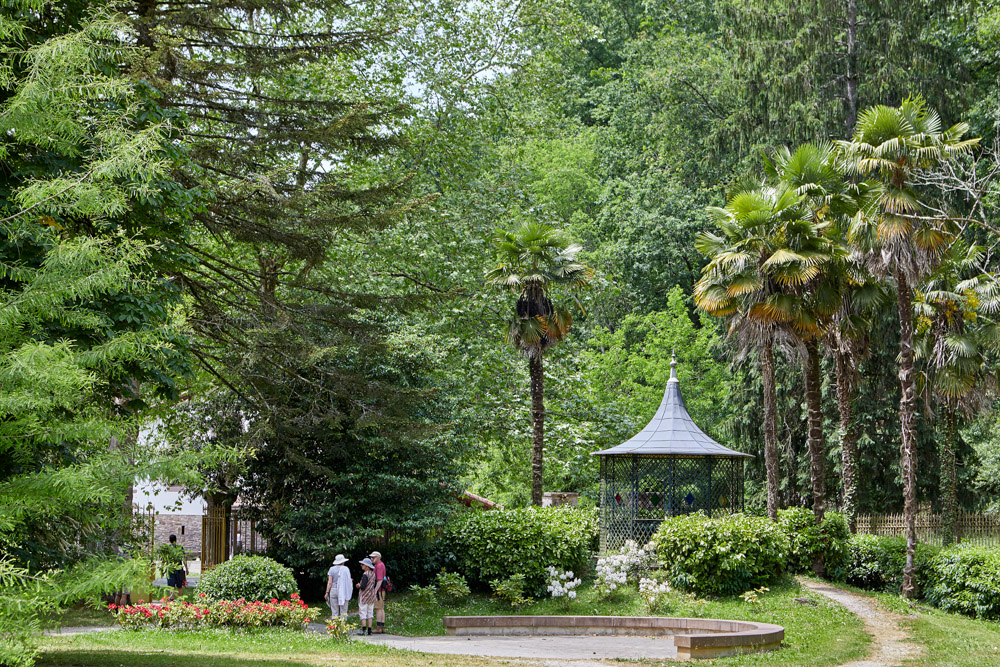
Historic and artistic garden of Bertiz
Information
4
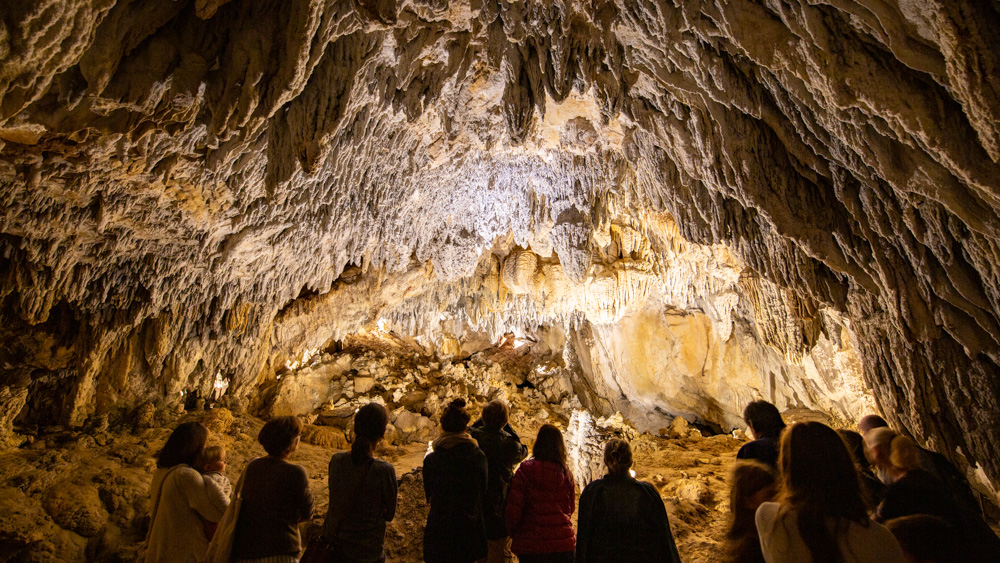
The Caves of Urdax
Information
The Caves of Urdax are remarkable for their karstic galleries sculpted by the river Urtxume, their Magdalenian Palaeolithic deposits with engravings dating back 13,000 years, their magical stalactites and the legends of “lamias” (mythological creatures) of the Baztan.
Photo : © Francis Vaquero
5
Museum of Zugarramurdi
Information
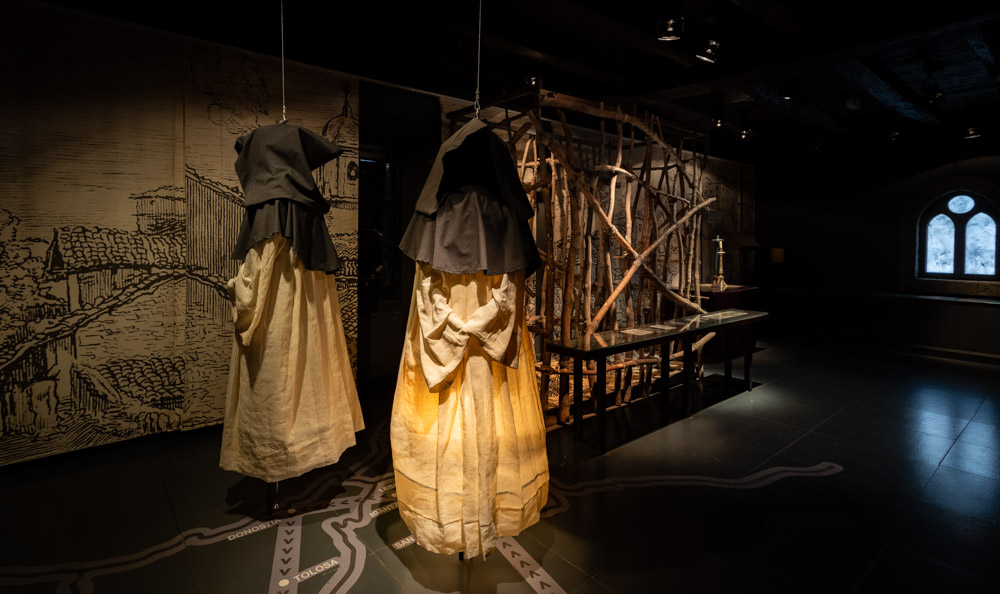
Zugarramurdi is an emblematic place owing to the Inquisition trial of 1610, which led to the largest witch-burning in Spain. Its open-air cave is said to have been the scene of sabbaths; today, this memory — between superstition and mythology — is preserved in its museum.
Photo : © Francis Vaquero
6
Village of Espelette and its PDO pepper
Information
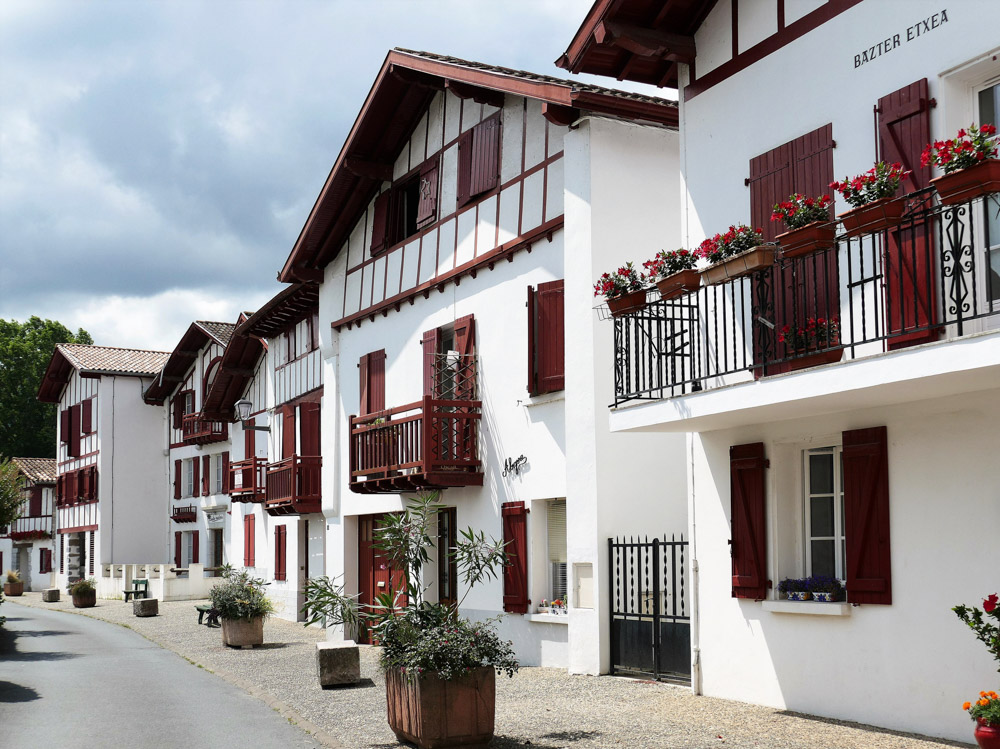
The Espelette pepper is famous for its mild-spicy flavour, unique to the French Basque Country. Hand-cultivated and dried on the village facades, it gives them a reddish hue that guides us to its medieval castle.
Photo : © F.Perrot
7
Spa town of Cambo-les-Bains
Information
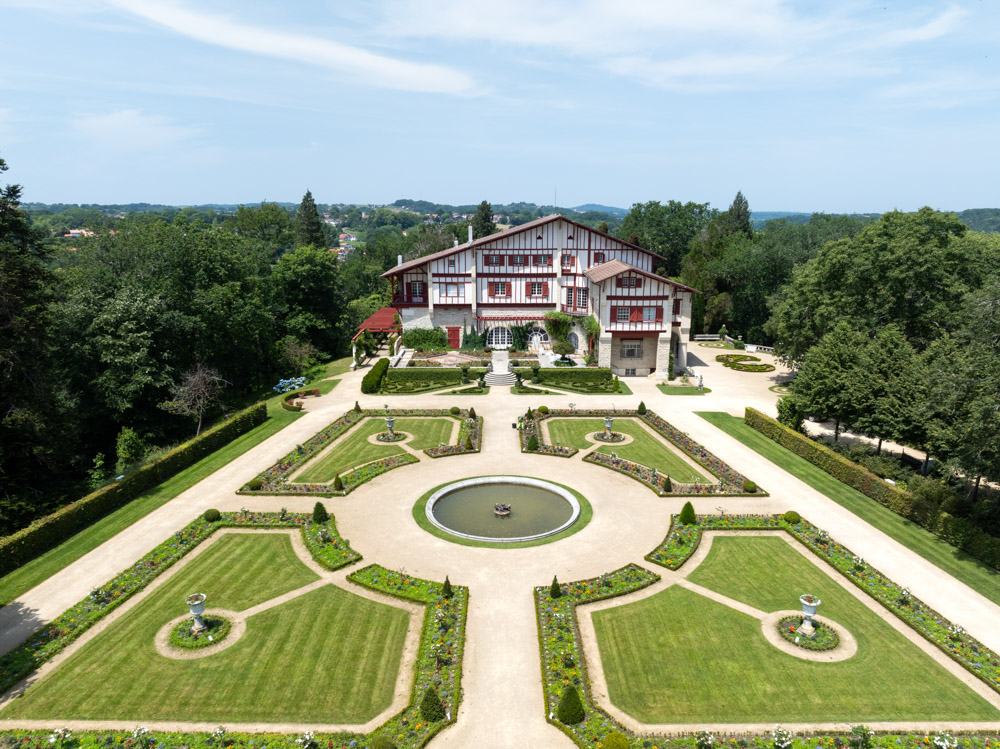
Cambo-les-Bains charms with its Art Deco thermal baths — unique in the French Basque Country — its sulphurous waters beneficial for rheumatism and respiratory conditions, its lush park planted with palm trees and the Villa Arnaga of Edmond Rostand.
Photo : © Instapades Studio
8
La Bastide-Clairence
Information
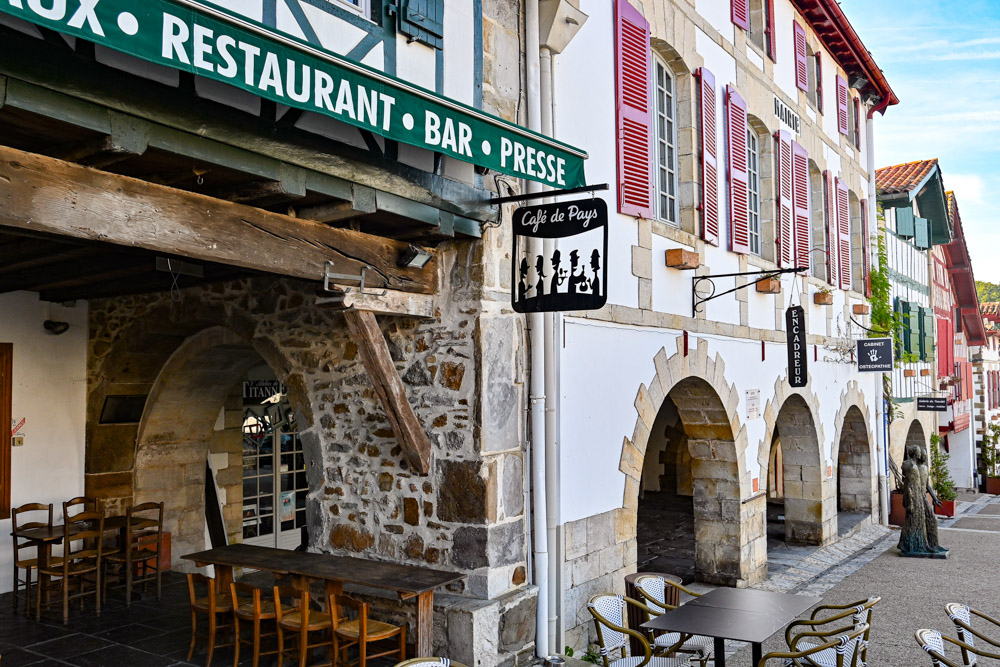
La Bastide-Clairence charms as one of the “Plus Beaux Villages de France”. It is a 14th-century Navarrese bastide with red and green half-timbered houses, a church with wooden galleries, the oldest trinquet in France and a historic Jewish cemetery.
Photo : © ADT64
9
Baztan Valley – Elizondo
Information
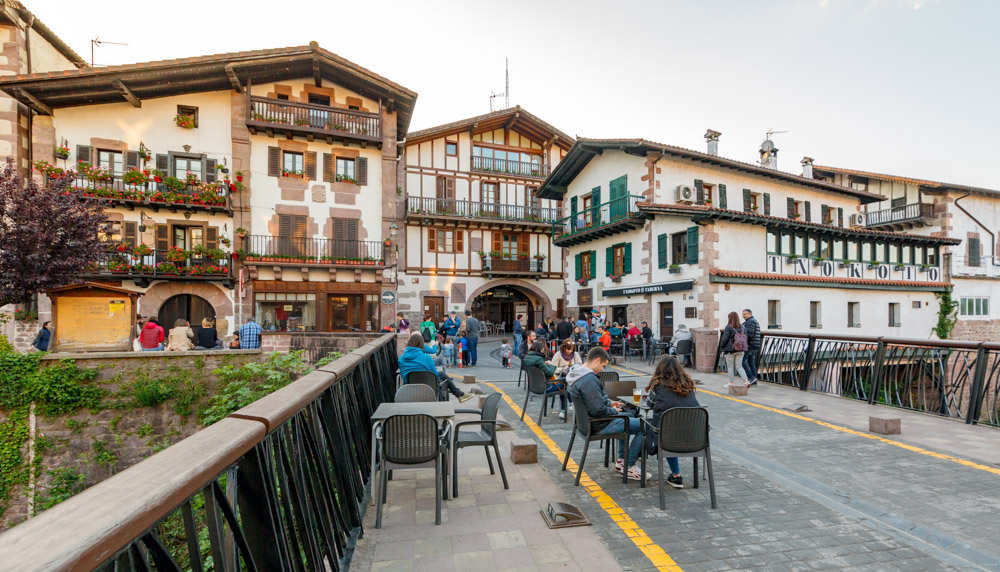
The Baztan Valley is unique for its lush landscapes of the “Navarrese Switzerland”, its pink stone farmhouses, its “Indiano” palaces (emigrants returned with their fortune) and its witchcraft legends. Elizondo, its capital, stands out for its stately architecture, the river Bidasoa and authentic Basque folklore.
Photo : © Francis Vaquero
10
Cider house and fishing history on the Basque coast
Information
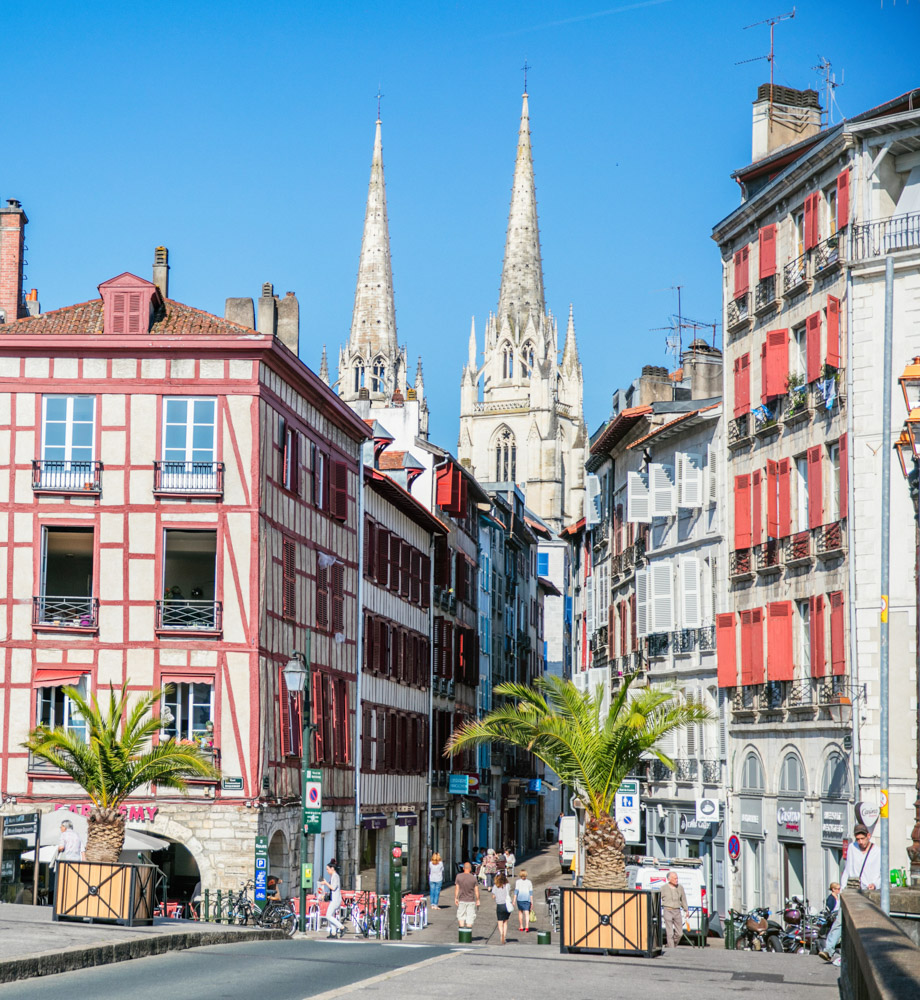
Traditional fishing on the French-Basque coast began with whale hunting. Today, tuna, sea bream and hake are fished using artisanal methods. The cider houses celebrate this heritage with seafood menus washed down with fresh local cider.
Photo : © Pierre Alex
Belgium, Netherlands and Luxembourg
Vols vers Biarritz
Avec Ryanair depuis Bruxelles (Aéroport de Charleroi).
Avec KLM depuis Amsterdam.
Avec Luxair depuis Luxembourg.
Vols vers Bordeaux Bordeaux se trouve à 2h20 de la route de Pau. Des liaisons ferroviaires sont également possibles vers Pau, ainsi que vers Bayonne.
Avec KLM depuis Amsterdam.
Avec EasyJet depuis Bruxelles.
Avec Volotea depuis Bruxelles (Aéroport de Charleroi).
Avec Luxair depuis Luxembourg.
Train vers Bayonne
En train depuis Bruxelles (avec changement de train et de gare à Paris) jusqu’à Bayonne.
United Kingdom
Vols vers Biarritz
Avec Ryanair depuis Édimbourg.
Avec Ryanair et EasyJet depuis Londres.
Vols vers Bordeaux Bordeaux se trouve à 2h20 de la route de Pau. Il est également possible de prendre un train direct depuis Bordeaux vers Bayonne pour commencer l’itinéraire.
Avec EasyJet depuis Bristol, Édimbourg et Manchester.
Avec British Airways depuis Londres (Aéroport de Gatwick).
Germany
Vols vers Biarritz
Avec Lufthansa depuis Francfort et Munich.
Vols vers Bordeaux Bordeaux se trouve à 2h20 de la route de Pau. Il est également possible de prendre un train direct depuis Bordeaux vers Bayonne pour commencer l’itinéraire.
Avec EasyJet depuis Berlin (Aéroport de Brandebourg).
Avec Air Dolomiti depuis Francfort.
Avec Lufthansa depuis Munich (Aéroport Franz Josef Strauss).
Pamplona
Foire de la Saint-Antoine (San Antón) : 17 janvier.
Pamplona Negra (Cinéma et littérature policière/noire) : Dernière semaine de janvier.
Fête des Chaudronniers et des Gitans (Caldereros y Zingaros) : Week-end précédant le Carnaval.
Festival Punto de Vista (Cinéma documentaire) : 1re semaine de mars.
Iruña Rock : Fin mai.
Grandes Fêtes (San Fermín) : Du 6 au 14 juillet.
Festival International de Musique Pamplona Reclassics : Dernier week-end de juillet.
Festival des Remparts (Festival de las Murallas) : Durant le mois d’août.
Festival de musique « Flamenco On Fire » : Dernière semaine d’août.
Foire Médiévale : 1er week-end de septembre.
Festival « Rincones y Recovecos » : 2e week-end de septembre.
San Fermín Txikito (Les « petites » fêtes de San Fermín) : 3e week-end de septembre.
Festival Santas Pascuas : De mi-novembre à début janvier.
Zugarramurdi
Fêtes Patronales : Autour du 15 août.
Festival Speedshear (Tonte de moutons) : Mi-août.
Zikiro-jatea (Repas populaire) : Dernier jour des fêtes (août).
Bayonne
Foire au Jambon : Week-end de Pâques.
Fêtes de Bayonne : Début de la deuxième quinzaine de juillet.
Feria de l’Atlantique : Début septembre.
Le Temps d’Aimer la Danse : Première quinzaine de septembre.
Festival Points de Vue (Arts urbains) : Début octobre.
Bayonne fête son Chocolat : Du 31 octobre au 2 novembre.
Noël à Bayonne : De fin novembre à début janvier.
Cambo-les-Bains
Nuit des Musées (Villa Arnaga) : Courant mai.
Spectacles et soirées basques : Juillet et août.
Fêtes de la Saint-Laurent : Du 8 au 13 août.
Fête du Gâteau Basque : Début octobre (généralement le 1er week-end).
Ituren and Zubieta
Carnavals : Lundi (Ituren) et mardi (Zubieta) suivant le dernier dimanche de janvier.
Recommendation: May, June, late September and October.
This itinerary is recommended for almost any time of year, avoiding if possible the end of December and the months of January and February, due to storms and snowfall. Despite this, it offers many indoor places to visit, allowing the routes to be adapted to more cultural visits while skipping the more natural aspects. The best months to discover the landscapes at their most exuberant are May, June, late September and October.
Travel better, all year round
Travelling better means choosing a more respectful form of tourism towards the territories and those who make them thrive. Through these itineraries, the project invites you to slow down, to immerse yourself in the landscapes, to meet the locals and to appreciate local know-how, while adopting responsible and sustainable practices.