

The Cultural Crossing
One territory, a thousand stories
Before you start:
Type of route
car
2,000 kilometres
of adventure
4 weeks / 4 stages
of happiness
Season
All year round
Route overview
Fishing villages, sanctuaries, castles and medieval fortresses… a cultural road trip like no other awaits! You cross the Pyrenees from the Atlantic to the Mediterranean, uncovering the region’s architectural and historical heritage at every turn. Along the way, you experience the astonishing diversity of the Pyrenean landscapes.
Whether you find yourself deep within nature reserves or national parks, on quiet foothill lanes, or at the foot of the highest peaks around, the sheer grandeur of the Pyrenees will stop you in your tracks.
Top points of interest
1
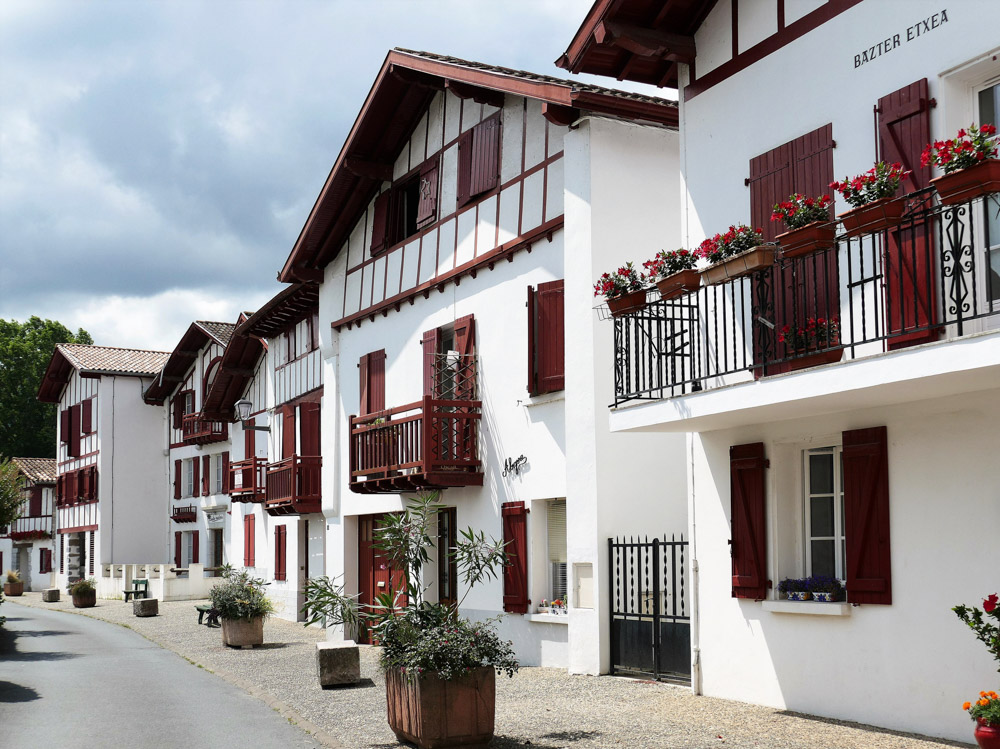
Iparralde: The villages of the French Basque Country
Information
Iparralde stands out for its picturesque villages with traditional houses (etxea), narrow streets and steep roofs. This region asserts a strong cultural identity, proudly preserving the Basque language, gastronomy and ancestral traditions.
Photo : © F.Perrot
2
Pic du Midi de Bigorre
Information
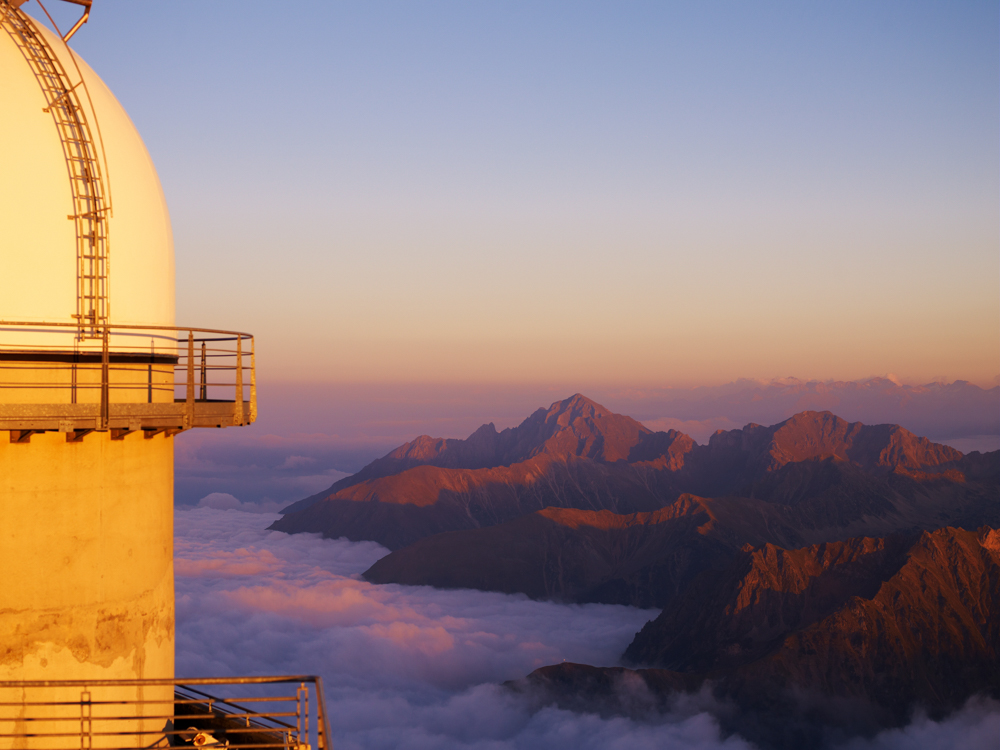
The Pic du Midi de Bigorre (2,877 m) is an iconic mountain of the French Pyrenees. It is famous for its astronomical observatory, its exceptional panoramic views, its mountain resorts and its scientific and touristic significance.
Photo : Dominique Viet
3
Romanesque art of the Vall de Boí
Information
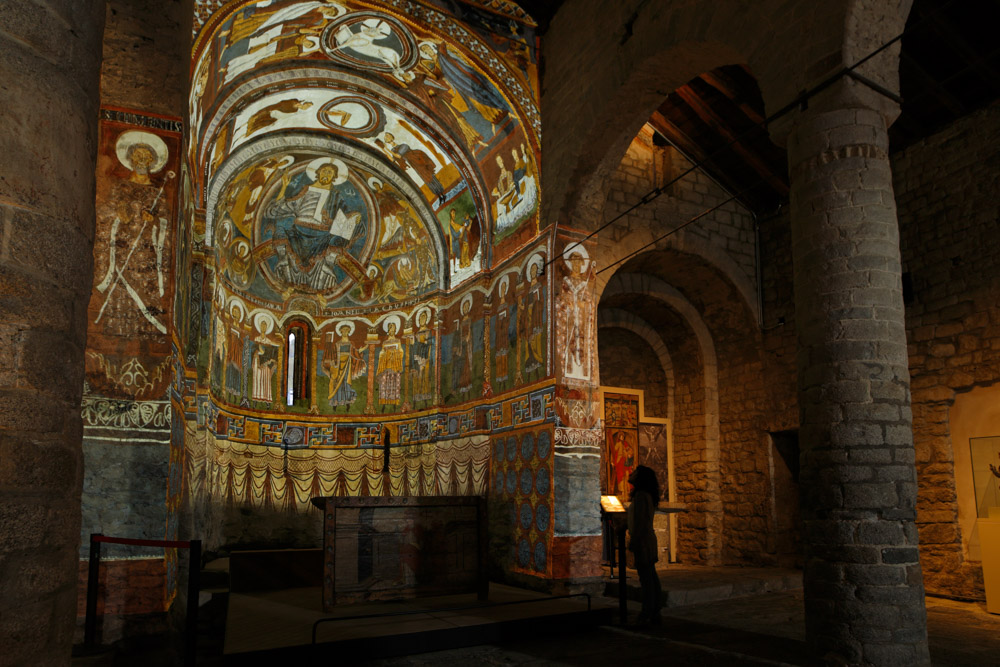
The Romanesque art of the Vall de Boí, a UNESCO World Heritage Site, stands out for its stone churches, slender bell towers, interior frescoes and harmonious architecture, symbols of the religious and artistic richness of the Catalan Pyrenees.
Photo : © Arxiu Patronat Vall de Boí
4
Guided tour of the Cathar castle of Montségur
Information
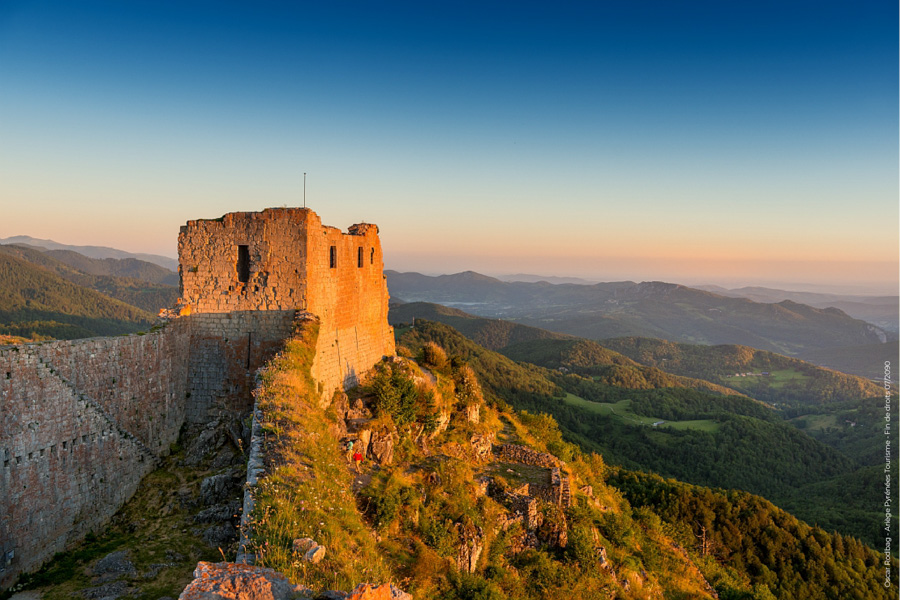
Perched at 1,207 m altitude, the castle of Montségur was a Cathar refuge and a symbol of resistance in the Middle Ages. Marked by sieges and a tragic end in 1244, it is the ideal place to discover the history of Catharism with a specialised guide.
Photo : © Oscar Rodbag
5
Monastery of Sant Pere de Rodes
Information
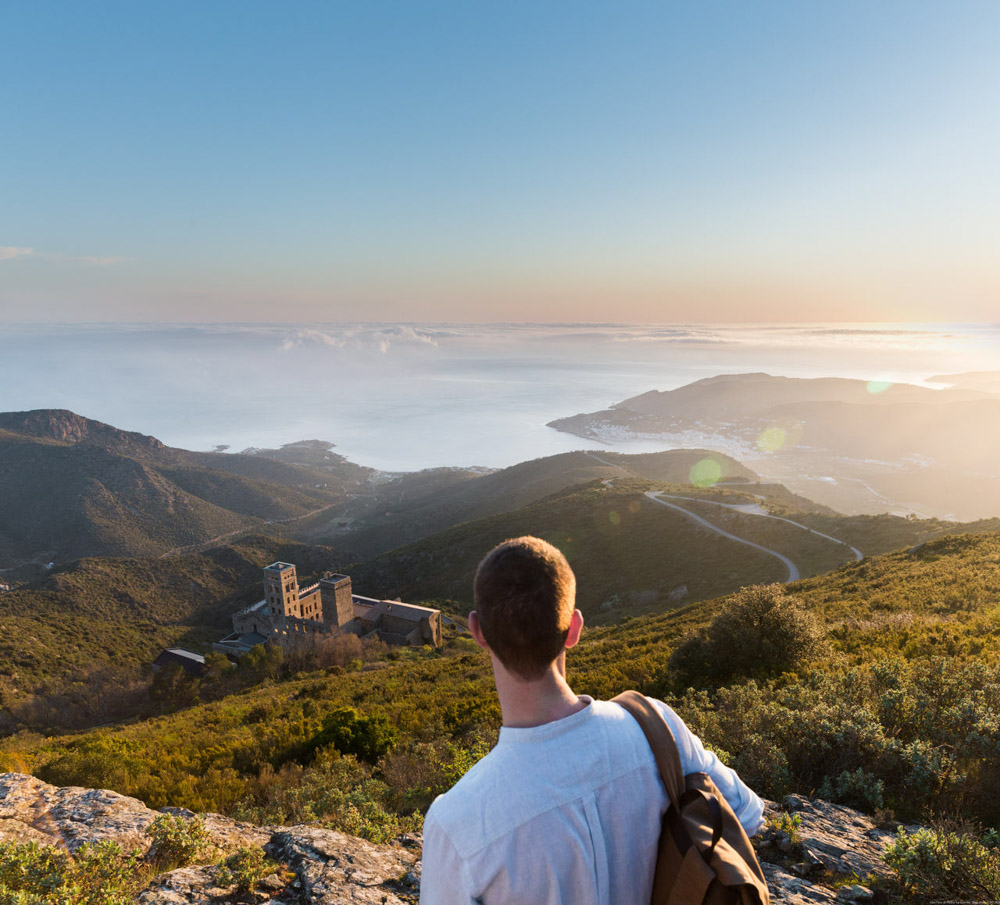
An imposing Benedictine monastery from the former county of Empúries (9th century), it is perched at 700 metres altitude above the sea, offering a breathtaking view over the Costa Brava and the immensity of the Mediterranean.
Photo : © ACT Arxiu
Stage descriptions
Freedom first: this itinerary can be tailored to your needs, with the possibility of selecting specific stages.
Week 1 - Stages 1 to 7 - Bayonne -> Ochagavía
This opening week takes you from Bayonne to Ochagavía, between the Atlantic coast and the Navarrese valleys. You start with the historic heart of Bayonne — its cathedral, its market and its chocolate workshops — before following the Basque coast to Biarritz and Saint-Jean-de-Luz, through fishing quarters and Belle Époque architecture. Heading inland, you discover Sare and its Basque cake workshop, Espelette and its famous pepper, then Ainhoa, listed among the Plus Beaux Villages de France. Across the border, the Baztan valley immerses you in a world of legends — the caves and akelarres of Zugarramurdi, the Santxotena museum and the story of the Agotes in Arizkun. The week continues in Pamplona, between pintxos in the old town and its Gothic cathedral, then on to Roncesvalles — legendary stop on the Way of Saint James — and the Salazar valley, all the way to the village of Ochagavía at the edge of the forest of Iraty.
Points of interest
Iparralde: The villages of the French Basque Country
Information
Iparralde stands out for its picturesque villages with traditional houses (etxea), narrow streets and steep roofs. This region asserts a strong cultural identity, proudly preserving the Basque language, gastronomy and ancestral traditions.
Photo : © F.Perrot
Pamplona and its cathedral
Information
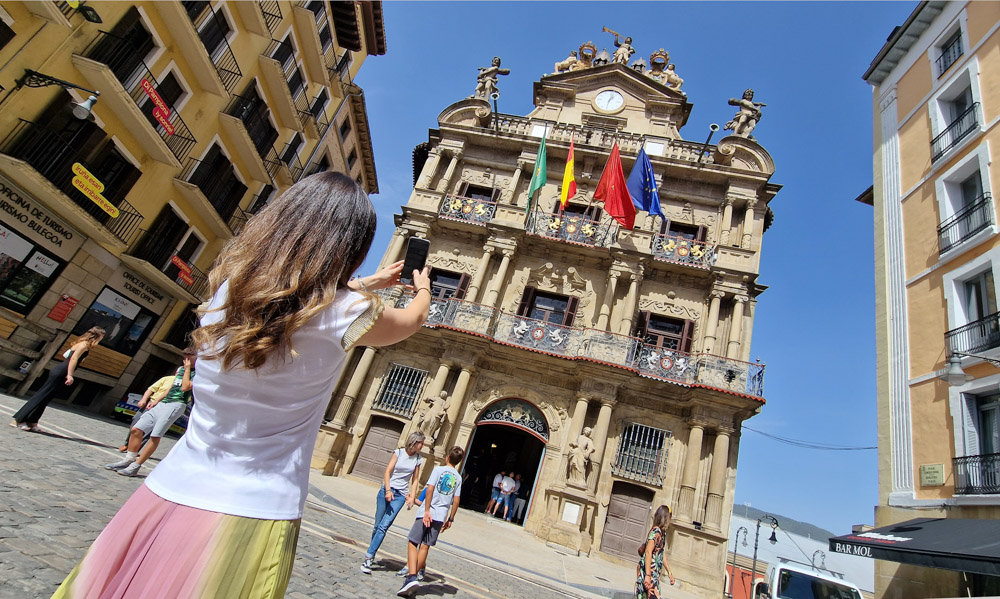
Old Pamplona preserves its medieval alleyways, historic landmarks and ramparts in an ever-lively atmosphere. Its cathedral stands out for its Gothic architecture, its Renaissance cloister and its major cultural and religious significance in Navarre.
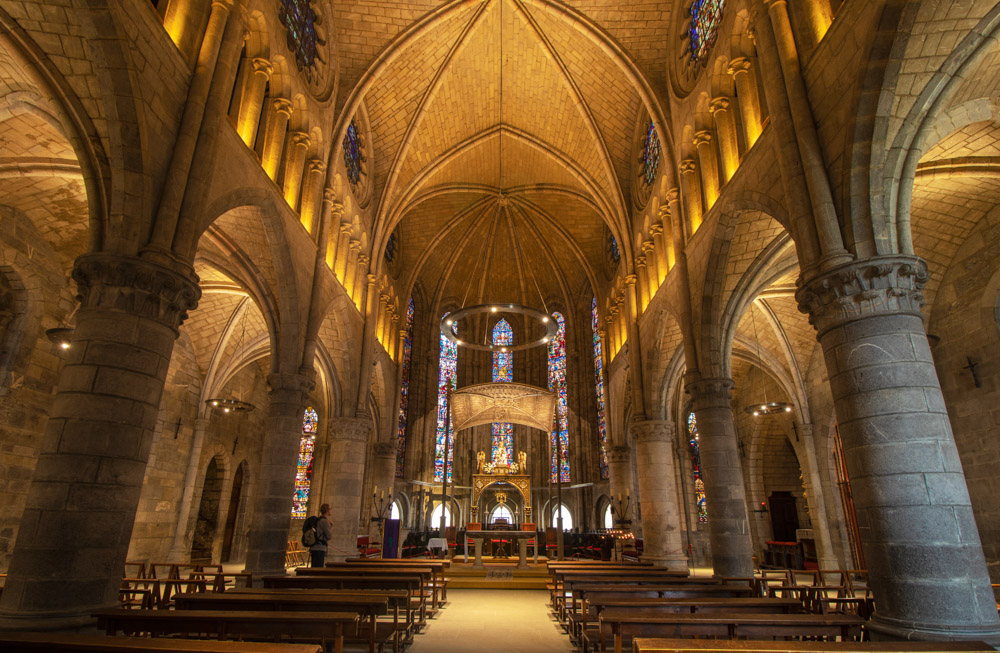
Collegiate church of Santa María de Roncesvalles
Information
Located in Navarre, this Romanesque-Gothic ensemble stands out for its religious importance, its monumental architecture and its historic cloister. The collegiate church occupies a strategic and essential position on the Way of Saint James.
Photo : © Francis Vaquero
Week 2 - Stages 8 to 14 - Ochagavía -> Bagnères-de-Bigorre
From Ochagavía to Bagnères-de-Bigorre, this second week plunges you into the heart of the high Pyrenean peaks. You begin with the forest of Iraty, one of the largest beech woodlands in Europe, then the Roncal valley and its artisanal dairies where the tradition of Roncal PDO cheese lives on. The landscape reaches a spectacular dimension in the Belagua valley, with the karstic nature reserves of Larra and Aztaparreta — a UNESCO World Heritage Site. On the French side, Oloron-Sainte-Marie and its Romanesque cathedral open the door to Béarn, followed by Pau — its Renaissance castle, birthplace of Henri IV, and the Boulevard des Pyrénées. The route continues aboard the Artouste train, a high-mountain tourist railway, then crosses the border at the Col du Pourtalet towards the Ordesa National Park and the medieval town of Aínsa. The week concludes with the sanctuary of Lourdes, the Cirque de Gavarnie and the ascent of the Pic du Midi de Bigorre — a full 360° panorama over the Pyrenean chain.
Points of interest
Pic du Midi de Bigorre
Information
The Pic du Midi de Bigorre (2,877 m) is an iconic mountain of the French Pyrenees. It is famous for its astronomical observatory, its exceptional panoramic views, its mountain resorts and its scientific and touristic significance.
Photo : Dominique Viet
Week 3 - Stages 15 to 21 - Bagnères-de-Bigorre -> Mont-Louis
Between Bagnères-de-Bigorre and Mont-Louis, this third week is arguably the richest in contrasts. You first reach Saint-Bertrand-de-Comminges and its Romanesque cathedral — a UNESCO World Heritage Site as part of the Routes of Santiago de Compostela — before crossing the Col du Portillon into the Val d’Aran, where ecomuseums and traditional houses bear witness to an ancestral mountain way of life. The Parc Nacional d’Aigüestortes i Estany de Sant Maurici, the only national park in Catalonia, precedes the discovery of the Romanesque churches of the Boí valley, an outstanding ensemble inscribed as a World Heritage Site. Further east, the ecomuseums of the Pallars Sobirà and the Romanesque cathedral of La Seu d’Urgell draw you into Pyrenean ethnography. Crossing into Andorra reveals a lesser-known Romanesque heritage and an Iron Route that traces the country’s mining past. The return to France takes you through the Ariège and its Cathar castles — the fortress of Foix and the vertiginous Montségur, symbol of the Cathar resistance — all the way to the citadel of Mont-Louis.
Points of interest
Romanesque art of the Vall de Boí
Information
The Romanesque art of the Vall de Boí, a UNESCO World Heritage Site, stands out for its stone churches, slender bell towers, interior frescoes and harmonious architecture, symbols of the religious and artistic richness of the Catalan Pyrenees.
Photo : © Arxiu Patronat Vall de Boí
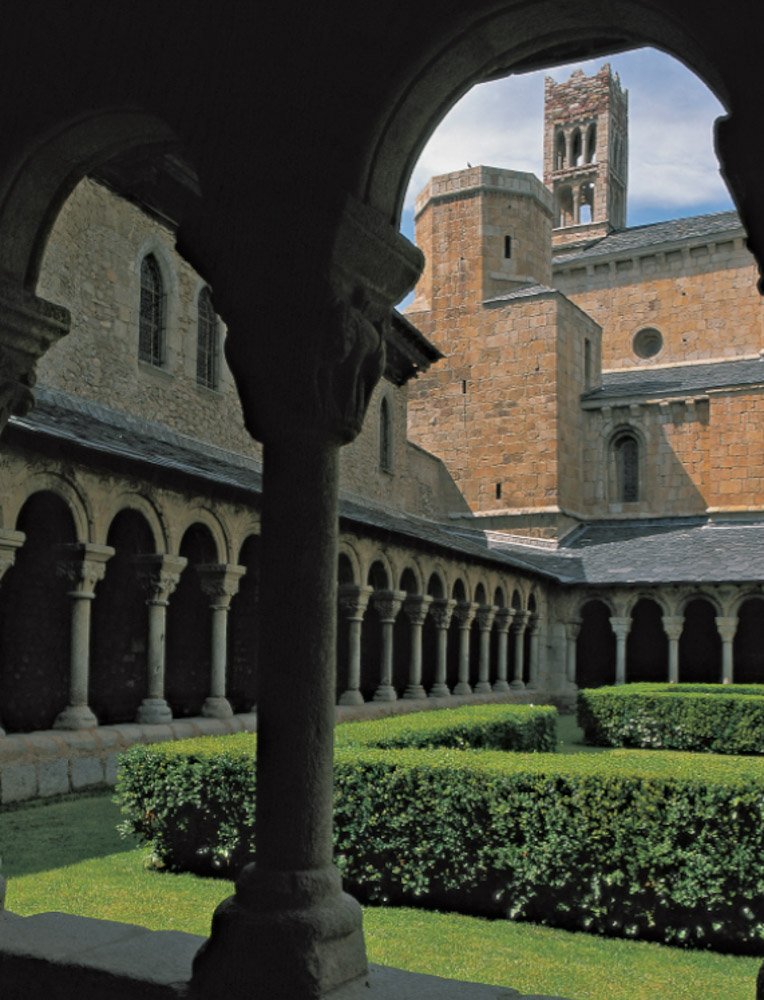
Cathedral of Sainte-Marie d'Urgell
Information
The cathedral of Sainte-Marie d’Urgell ( Santa María de Urgell ) is a remarkable example of Catalan Romanesque art. It is characterised by its harmonious proportions, its Italian influence and its great religious and historical importance in the Pyrenees.
Photo : © Nano Cañas
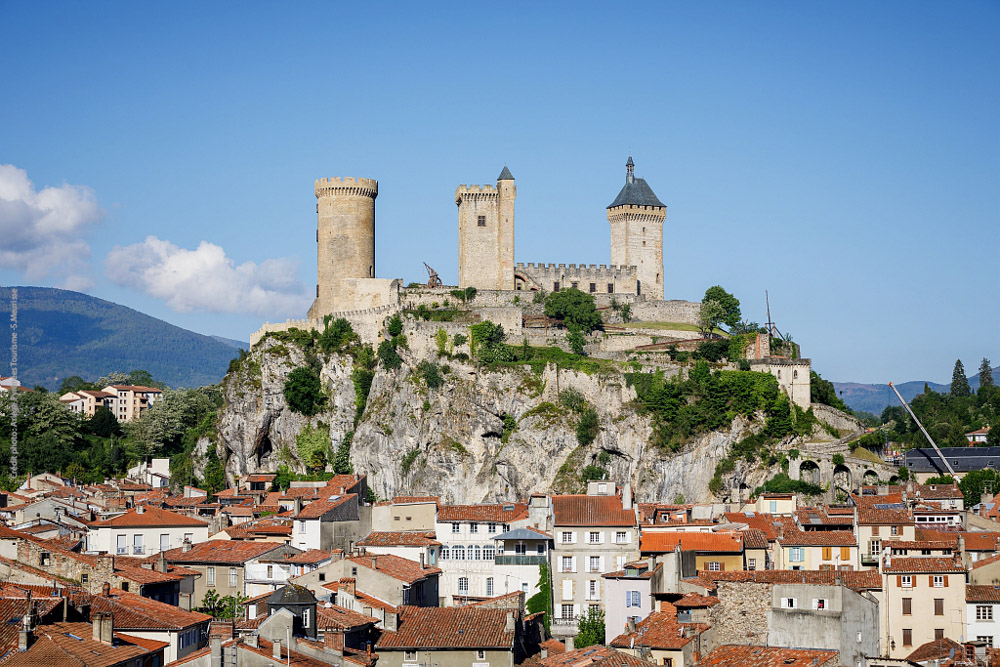
Cathar castles of the Foix region
Information
The Cathar castles of the Foix region rise on rocky ridges. Symbols of medieval resistance, they offer spectacular views and evoke the religious and military history of southern France.
Photo : © Stéphane Meurisse
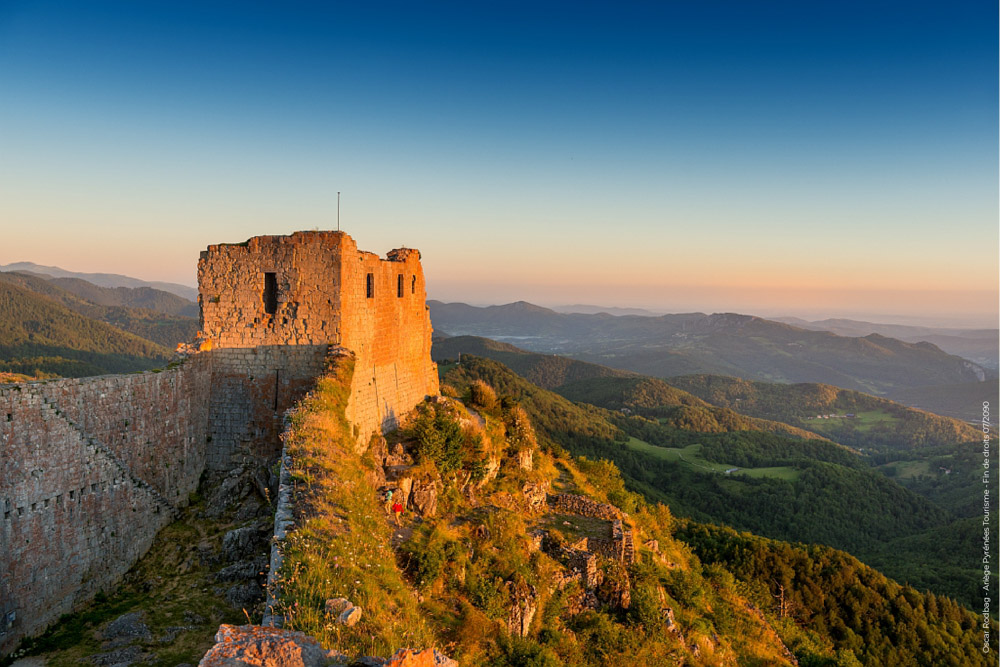
Guided tour of the Cathar castle of Montségur
Information
Perched at 1,207 m altitude, the castle of Montségur was a Cathar refuge and a symbol of resistance in the Middle Ages. Marked by sieges and a tragic end in 1244, it is the ideal place to discover the history of Catharism with a specialised guide.
Photo : © Oscar Rodbag
Week 4 - Stages 22 to 28 - Mont-Louis -> Figueres
This fourth and final week carries you from Mont-Louis to Figueres, through the Mediterranean Pyrenees. You start with the high-altitude lakes of Capcir and the historical enclave of Llívia, before reaching the Vall de Núria by rack railway, then the monastery of Ripoll — cradle of Catalan identity and home to its celebrated Romanesque portal. Crossing the Col d’Ares brings you back into France via Prats-de-Mollo and Saint-Laurent-de-Cerdans — a land of exile and espadrilles — then Arles-sur-Tech and its artisan workshops. In the heart of the Conflent, the Benedictine monasteries of Saint-Martin du Canigó and Saint-Michel de Cuxa await — masterpieces of Romanesque art at the foot of the sacred massif. The road then drops towards Perpignan and its Palace of the Kings of Majorca, then Collioure and its Royal Castle. The crossing culminates along the Vermilion Coast — the vineyards of Banyuls, the monastery of Sant Pere de Rodes perched above the Mediterranean — before Cadaqués, the Greco-Roman ruins of Empúries, and the Dalí Theatre-Museum in Figueres as a grand finale.
Points of interest
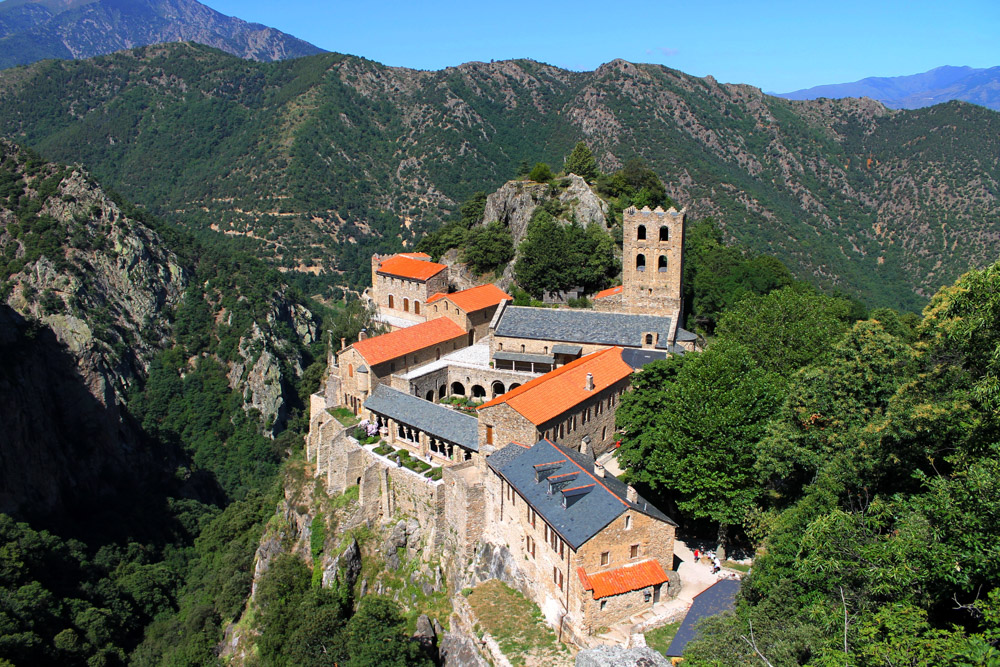
Benedictine monasteries of the Conflent
Information
These spectacular Benedictine monasteries of the Conflent stand out for their sober Romanesque architecture, their major spiritual and cultural role, and their harmonious integration into the medieval Pyrenean landscape.
Photo : © ADT66
Monastery of Sant Pere de Rodes
Information
An imposing Benedictine monastery from the former county of Empúries (9th century), it is perched at 700 metres altitude above the sea, offering a breathtaking view over the Costa Brava and the immensity of the Mediterranean.
Photo : © ACT Arxiu
All year round
However, in winter there may be an increased risk of snowfall that can complicate certain passages on mountain roads. That said, all roads used are main routes and are regularly cleared.
Snow and weather conditions only cause problems on occasional days, particularly when hikes at medium and high altitude are planned. In such cases, alternative excursions at lower altitude are already offered to avoid the snow.
The border passes, situated at a certain altitude, are accessible via main roads, which are cleared daily in the event of snow or frost.
Bayonne
Pays-Bas
- Avion : Amsterdam Schiphol – Biarritz Pays Basque Airport. 1 escale. (Prix : 114 € – 348 € / Durée : 4h – 5h). Location de voiture à l’aéroport de Biarritz : 15 min de trajet.
- Voiture : 1245 km / 12h / 300 € de carburant.
Belgique
Train : Bruxelles – Bayonne. 3 changements. (Prix : 53 € – 143 € / Durée : 8h).
Voiture : 1042 km / 10h / 200 € de carburant.
Allemagne
Avion : Francfort – Bordeaux-Mérignac Airport. Vol direct. (Prix : 345 € / Durée : 1h40). Location de voiture à l’aéroport de Bordeaux : 2h15 de trajet.
Voiture (depuis Francfort) : 1794 km / 16h / 350 € de carburant.
Royaume-Uni
- Train : Londres – Bayonne. (Prix : 136 € – 575 € / Durée : 7h40).
- Voiture (depuis Londres par Eurotunnel) : 1116 km / 11h40 / 250 € de carburant + Eurotunnel.
Ochagavía
Pays-Bas
- Avion : Aéroport Amsterdam Schiphol – Pau Pyrénées. Vol direct. (Prix : 271 € – 883 € / Durée : 8h). Localisation de voiture à l’aéroport de Pau : 2h de trajet.
- Voiture : 1339 km / 14h / 300 € de carburant.
Belgique
Train + Voiture : Bruxelles – Bayonne (3 changements, 8h) + voiture (2h). (Prix train : 53 € – 143 €).
Voiture : 1197 km / 13h / 250 € de carburant.
Allemagne
- Avion : Aéroport de Francfort – Pau Pyrénées. 1 échelle. (Prix : 993 € / Durée : 4h30). Localisation de voiture à l’aéroport de Pau : 2h de trajet.
- Voiture (depuis Francfort) : 1348 km / 15h / 300 € de carburant.
Royaume-Uni
- Train + Voiture : Londres – Bayonne (7h40) + voiture (118 km / 2h15). (Prix train : 136 € – 575 €).
- Voiture (depuis Londres par Eurotunnel) : 1210 km / 13h40 / 270 € de carburant + Eurotunnel.
Bagnères-de-Bigorre
Pays-Bas
- Avion : Amsterdam Schiphol – Aéroport Toulouse Blagnac. 1 échelle. (Prix : 107 € – 276 € / Durée : 4h30). Localisation de voiture à l’aéroport de Toulouse : 1h47 de trajet.
- Voiture : 1173 km / 11h24 / 250 € de carburant.
Belgique
- Avion : Aéroport de Bruxelles – Toulouse Blagnac. Vol direct. (Prix : 175 € / Durée : 1h40). Localisation de voiture à l’aéroport de Toulouse : 1h47 de trajet.
- Voiture : 970 km / 11h / 200 € de carburant.
Allemagne
- Avion : Francfort – Aéroport Toulouse Blagnac. Vol direct. (Prix : 321 € / Durée : 1h45). Localisation de voiture à l’aéroport de Toulouse : 1h47 de trajet.
- Voiture : 1126 km / 9h32 / 220 € de carburant.
Royaume-Uni
- Avion : Londres Heathrow – Aéroport Toulouse Blagnac. Vol direct. (Prix : 482 € / Durée : 1h50). Localisation de voiture à l’aéroport de Toulouse : 1h47 de trajet.
- Voiture : 1053 km / 11h10 / 300 € de carburant.
Mont-Louis
Pays-Bas
- Avion : Amsterdam Schiphol – Aéroport Barcelone. Vol direct. (Prix : 204 € / Durée : 2h15). Localisation de voiture à l’aéroport de Barcelone : 2h15 de trajet.
- Voiture : 1362 km / 13h35 / 300 € de carburant.
Belgique
- Avion : Bruxelles – Aéroport Barcelone. Vol direct. (Prix : 142 € / Durée : 2h05). Localisation de voiture à l’aéroport de Barcelone : 2h15 de trajet.
- Voiture : 1159 km / 11h43 / 230 € de carburant.
Allemagne
- Avion : Aéroport de Francfort. Vol direct. (Prix : 422 € / Durée : 2h). Localisation de voiture à l’aéroport de Barcelone : 2h15 de trajet.
- Voiture : 1146 km / 11h25 / 230 € de carburant.
Royaume-Uni
- Avion : Aéroport Londres Heathrow. Vol direct. (Prix : 174 € / Durée : 2h10). Localisation de voiture à l’aéroport de Barcelone : 2h15 de trajet.
- Voiture : 1242 km / 13h21 / 280 € de carburant.
Figueres
Pays-Bas
- Avion : Amsterdam Schiphol – Aéroport Barcelone. Vol direct. (Prix : 204 € / Durée : 2h15). Localisation de voiture à l’aéroport de Barcelone : 1h30 de trajet.
- Voiture : 1357 km / 13h50 / 300 € de carburant.
Belgique
- Avion : Bruxelles – Aéroport Barcelone. Vol direct. (Prix : 142 € / Durée : 2h05). Localisation de voiture à l’aéroport de Barcelone : 1h30 de trajet.
- Voiture : 1164 km / 11h50 / 230 € de carburant.
Allemagne
- Avion : Aéroport de Francfort. Vol direct. (Prix : 422 € / Durée : 2h). Localisation de voiture à l’aéroport de Barcelone : 1h30 de trajet.
- Voiture : 1172 km / 11h / 240 € de carburant.
Royaume-Uni
- Avion : Aéroport Londres Heathrow. Vol direct. (Prix : 174 € / Durée : 2h10). Localisation de voiture à l’aéroport de Barcelone : 1h30 de trajet.
- Voiture : 1266 km / 13h10 / 280 € de carburant.
Baztan Valley
Baztandarren Biltzarra : (Fête de la fraternité des peuples de la vallée).
Carnavals d’Ituren.
Semaine du 7 juillet : San Fermín, grande fête de Pampelune (proximité).
Pamplona
Semaine du 7 juillet : San Fermín, grande fête de Pampelune.
Roncesvalles
20 avril (Dimanche de Pâques) : Danse des Bolantes de Valcarlos.
Roncal Valley
Jour de la Almadía : Descente des radeaux traditionnels.
Ordesa and Monte Perdido National Park
Carnaval de Bielsa.
Fête de la Falleta : À San Juan de Plan.
Alta Ribagorça
Les Falles de la Vall de Boí (Fêtes du feu) :
13 juin à Durro.
23 juin à Boí.
5 juillet à Barruera.
12 juillet à Erill la Vall.
18 juillet à Taüll.
25 juillet au Pla de l’Ermita.
Lourdes
Carnaval de Bielsa
Pallars Sobirà
Transhumance.
Alt Urgell
Carnaval de Solsona.
Andorra
23 juin : Falles de la Saint-Jean.
Festival d’Andorre.
Bal de l’Ossa : Danse de l’Ours.
Cirque du Soleil.
ClassiqueEt.
Goût d’Andorre.
Capcir - Cerdagne
La Patum de Berga.
Ripollès
1er septembre : Saint-Gilles, fête de Núria.
21 juin : Sant Patllari, fête de Camprodon.
15 mai : Fête de la Laine et Mariage Paysan ( Casament a Pagès ) à Ripoll.
Mediterranean Pyrenees
Fêtes de l’Ours du Vallespir (Patrimoine culturel immatériel de l’UNESCO) :
2 février : Arles-sur-Tech.
16 février : Prats-de-Mollo.
23 février : Saint-Laurent-de-Cerdans.
Confluence
20 août : Université Catalane d’Été, Prades (Prada de Conflent).
22 juin : Descente de la flamme du Canigou.
Travel better, all year round
Travelling better means choosing a more respectful form of tourism towards the territories and those who make them thrive. Through these itineraries, the project invites you to slow down, to immerse yourself in the landscapes, to meet the locals and to appreciate local know-how, while adopting responsible and sustainable practices.